

Industry: Wearable Technology
Focus: Brand Strategy, Market Research, Positioning
Role: Strategic Research & Messaging
The Situation
This project began with a request to design packaging and branding for a new wearable device intended for the consumer sports market.
The ambition was clear: compete in retail against established brands such as Garmin, Fitbit, and Nike.
Before moving into design, I asked a simple question:
Why this market?
The answers were unclear.
The product was technically strong, but the reasoning behind the target market and positioning was weak.
Rather than rushing into branding and launch activity, I recommended stepping back and starting with research.
The Problem
The consumer sports wearable market is:
- highly competitive
- brand-driven
- dominated by companies with large budgets and strong retail presence
With a limited marketing budget and a product that prioritised function over aesthetics, competing on brand alone would have been extremely difficult.
The risk was clear: strong product, wrong market.
The Research
We conducted a detailed review of:
- target markets and use cases
- competing products
- buyer needs and decision criteria
- the device’s technical strengths
What emerged was a clear mismatch between the original market choice and what the product actually did best.
What the Product Was Actually Good At
The research showed that the device’s real strengths were not style or lifestyle branding, but practicality:
- Very long battery life
- Lightweight and waterproof design
- Comfortable to wear continuously for days
- Reliable data capture
These features were not especially compelling in the consumer fitness market.
But they were exactly what clinical research teams needed.
The Strategic Pivot
Based on the research, I recommended a complete change in direction.
Instead of competing in the consumer sports market, the device was repositioned for the U.S. clinical research and medical trials market.
This market:
- was significantly larger
- valued reliability over appearance
- required long wear times and dependable data
- was less driven by brand aesthetics
The product did not need to be fashionable.
It needed to be useful.
The Positioning Decision
The positioning strategy was intentionally restrained.
Rather than building a lifestyle brand, the focus shifted to:
- clear, functional messaging
- simple explanation of benefits
- technical reliability and comfort
- straightforward documentation for research teams
Visuals were kept minimal.
Language was direct.
The product was presented as a dependable research tool, not a consumer gadget.
The Outcome
While I was not responsible for the marketing rollout, the strategic repositioning proved successful.
The product moved away from an overcrowded consumer market and into a clearer, more suitable space within U.S. clinical research.
As part of this work, I also developed the product’s brand identity and core visual language to support its new positioning.
Its understated strengths became meaningful advantages rather than limitations.
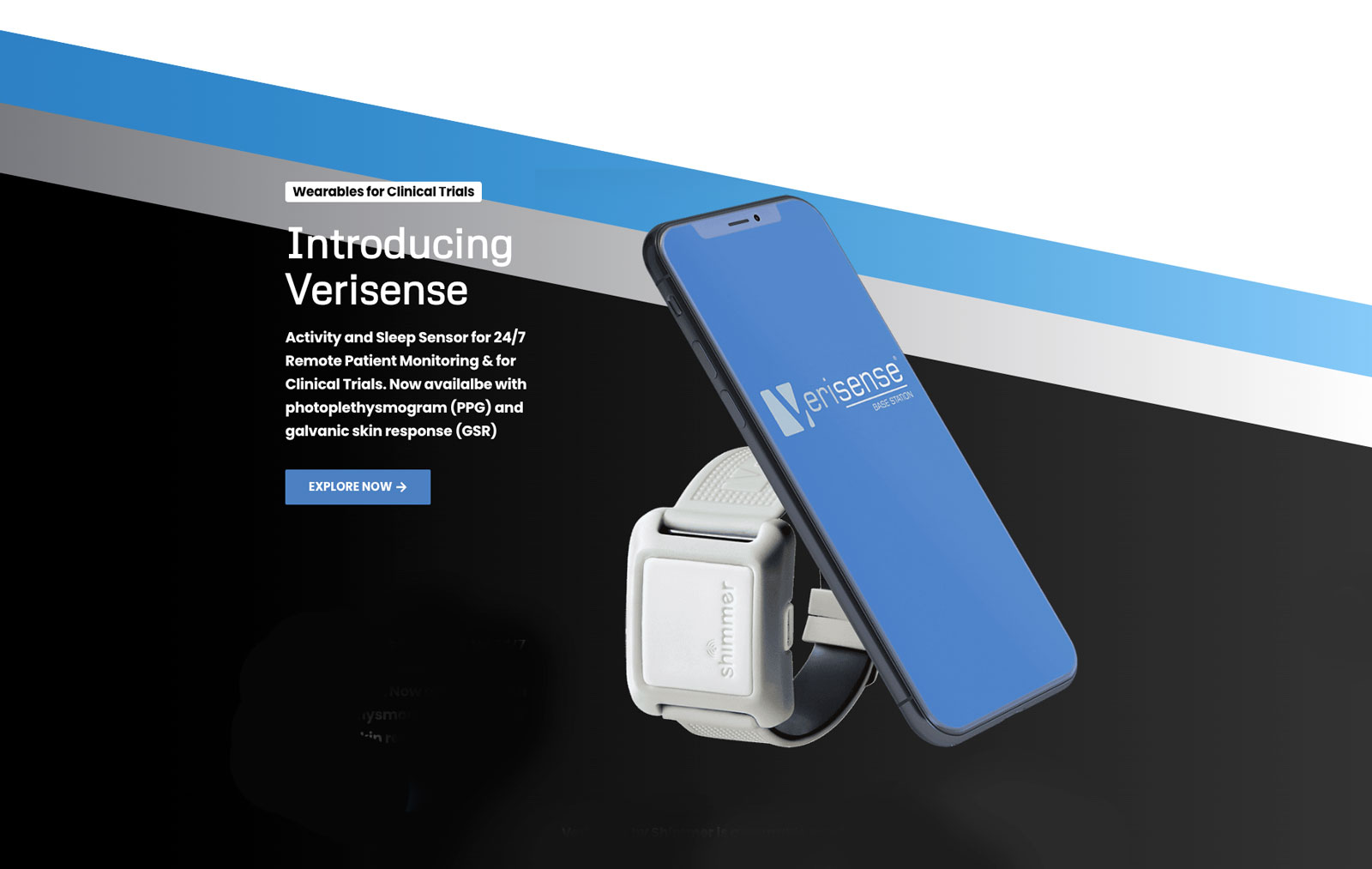

Verisense Brand Identity